Dutch Buyers Property Portugal 2026: Box 3, Tax Treaty, IFICI, Mortgages, and the Buying Process

Last updated: May 18, 2026. Dutch buyers have a straightforward legal route into Portugal because they are EU citizens, but the tax planning is not simple. The Dutch Box 3 system can tax Portuguese property for Dutch tax residents even when the property produces no Dutch income, and Portugal can also tax Portuguese rent and gains. This 2026 guide explains the Dutch buyer path from NIF and bank account to CPCV and escritura, with a practical focus on Box 3 wealth-tax exposure, IFICI offset math, the Netherlands-Portugal tax treaty, and Den Haag to Lisbon banking documentation.
The Dutch EU buyer advantage
A Dutch citizen buying in Portugal starts with a major advantage over most international buyers: EU citizenship. The right to enter, live, work, and buy in Portugal is not dependent on D7, D8, Golden Visa, or AIMA residence visa scheduling. A Dutch buyer can come to Portugal, rent first, inspect properties across seasons, open the necessary tax and banking file, and buy when the right asset appears. This removes one of the biggest sources of pressure seen in non-EU purchases.
The administrative reality still matters. A Dutch citizen staying in Portugal for more than three months should register EU residence with the local câmara municipal. A non-EU spouse or partner may need separate residence documentation as a family member. Children, schooling, health insurance, driving licence timing, address registration, and tax-residence facts should all be planned. The EU passport helps, but it does not turn a cross-border move into a holiday booking.
Dutch buyers often arrive with a high level of financial organisation. They are used to mortgage discipline, online banking, municipal taxes, energy labels, and clear documentation. That helps in Portugal. It can also create false confidence because Portuguese property practice is different. The CPCV deposit, land registry details, urban versus rustic classification, habitation documentation, condominium records, and municipal licensing checks are local issues.
The most important separation is residence versus ownership. A Dutch person can own Portuguese property while remaining Dutch tax resident. A Dutch person can also become Portuguese tax resident after moving. Those two facts create different outcomes. The Netherlands taxes residents on worldwide assets under Box 3 rules, while Portugal taxes Portuguese-situs property income and gains under Portuguese law. The treaty decides how double taxation is relieved. It does not remove the need to report.
For the general purchase process, start with our complete buyer guide to houses for sale in Portugal. Finance readers should also compare the Portugal mortgage rates guide, the NIF guide for foreign buyers, the Golden Visa guide, the D7 visa guide, and the NHR and IFICI tax guide before signing a CPCV.
For 2026, the Dutch buyer's first planning question should be: am I buying a second home while remaining in the Netherlands, or am I moving my centre of life to Portugal? The answer affects Box 3, mortgage affordability, rental planning, IFICI eligibility, healthcare, school choices, and future sale tax. The wrong answer does not always break the purchase, but it can make the after-tax result very different from the spreadsheet used at offer stage.
Box 3 wealth tax and Portuguese property
The Dutch-specific issue is Box 3. A Portuguese property can sit inside the Dutch Box 3 calculation for a Dutch tax resident even if it produces no rental income in the Netherlands and even if all rent, costs, and tenants are in Portugal. This is the point many buyers miss. Box 3 is not an income tax in the ordinary landlord sense. It is a system for taxing deemed returns on assets, subject to current law, transitional rules, valuations, debts, allowances, and ongoing reform.
A Dutch resident who buys a €500,000 apartment in Cascais with €250,000 of debt does not simply ask whether Portugal taxes the rent. They must ask how the Portuguese asset and related debt are reported in Box 3, how double-tax relief for foreign real estate is calculated, whether the treaty exemption applies through a reduction mechanism, and what evidence Belastingdienst expects. A property with no rent can still have Dutch reporting consequences because the asset has value.
Foreign real estate is commonly treated under the Netherlands tax system with reference to value in economic traffic rather than Dutch WOZ in the same way as Dutch property. Buyers need advice on valuation date, currency, debt allocation, partner allocation, and documentation. If the property is rented, Portuguese rental reporting and Dutch Box 3 reporting are still separate layers. If the buyer moves to Portugal and ceases Dutch tax residence, the Box 3 analysis may change, but that depends on actual residence facts and any continuing Dutch ties.
Box 3 reform is also a 2026 freshness issue. Dutch rules have been in transition after litigation about deemed returns, with bridging legislation and plans for a system closer to actual returns. Property buyers should assume change risk. A purchase that looks acceptable under one year's deemed-return assumptions may need to be revisited when rates, categories, or actual-return measures change. Keep the model flexible.
A practical Dutch buyer model should show at least four lines. First, Portuguese acquisition cost: purchase price, IMT, stamp duty, notary, registry, lawyer, bank costs, valuation, and broker cost if any. Second, Portuguese annual cost: IMI, insurance, condominium, maintenance, management, Portuguese income tax, and accounting. Third, Dutch Box 3 treatment: asset value, related debt, tax partner allocation, applicable relief, and evidence. Fourth, exit: Portuguese mais-valias, Dutch residence position on sale, mortgage discharge, agent fee, and exchange risk if any. Since both countries use the euro, currency is simpler than for sterling or dollar buyers, but tax is not.
Netherlands-Portugal treaty treatment
The Netherlands-Portugal tax treaty follows the common principle that income from immovable property may be taxed in the country where the property is located. For Portuguese real estate, that means Portugal has taxing rights over rent and certain gains. A Dutch tax resident does not ignore the income or asset. They must apply Dutch domestic law and the treaty relief method to avoid double taxation where relief is available.
This distinction is important for rental property. Portugal may tax Portuguese rental income. The Netherlands may still require Box 3 reporting of the asset for a Dutch tax resident. Treaty relief may reduce Dutch tax attributable to the Portuguese real estate, but the filing position must be built carefully. The Dutch and Portuguese advisors should agree on whether the property is held personally, by spouses or partners, through a company, or through another structure.
Capital gains also need treaty review. Portugal can tax gains from the sale of Portuguese property under Portuguese mais-valias rules. If the seller is Dutch tax resident at sale, the Dutch tax treatment depends on Box 3, treaty rules, and the law in force at the time. If the seller has moved to Portugal and become Portuguese tax resident, the Dutch position may be different, but ties to the Netherlands, emigration timing, and any business or substantial-interest issues must be checked.
Short-term rental can change the tone of the analysis. A pure second home used by the family is one thing. A high-turnover alojamento local operation with services, cleaning, platform marketing, and local management may raise Portuguese licensing and tax questions. It can also affect how Dutch advisors think about the asset, especially if activity looks more business-like. The treaty does not replace local licensing law.
Debt allocation is another recurring issue. A Dutch mortgage on a Dutch home, a Portuguese mortgage on a Portuguese home, family loans, and investment portfolio loans are not interchangeable for treaty relief or Box 3 modelling. Buyers sometimes want to borrow where rates are cheapest and allocate debt mentally to the Portuguese property. Tax authorities may require a clearer legal and economic connection. Documentation matters.
The safest planning process is boring. Decide residence position. Decide ownership shares. Obtain the NIF. Open the bank account. Model Portuguese taxes. Model Dutch Box 3 and treaty relief. Confirm mortgage affordability. Only then sign a CPCV. When the tax model is done after the deposit is paid, the buyer has already lost negotiating power.
IFICI after NHR and the offset math
Dutch buyers still ask about NHR because many older Portugal articles were built around it. For new arrivals in 2026, the old NHR regime is not the general answer. Transitional cases exist, but a Dutch buyer planning a fresh move should assume NHR is closed unless a qualified advisor confirms a specific transitional route. The newer IFICI regime is narrower and activity-based. It can help certain qualifying professionals, researchers, executives, and innovation-linked workers, but it is not a broad second-home or pension regime.
The Dutch-specific question is offset math. Suppose a Dutch professional moves to Portugal, becomes Portuguese tax resident, qualifies for IFICI on eligible employment income, and keeps assets in the Netherlands. The Portuguese tax benefit may reduce Portuguese tax on qualifying income, but it does not automatically solve Dutch taxation if the Netherlands still treats the person as tax resident. The first issue is residence. If Dutch residence has not ended, Dutch worldwide taxation may still be relevant. If Dutch residence has ended, Dutch non-resident rules and remaining Dutch-source assets need separate review.
For a property buyer, the important point is that IFICI does not make Portuguese real estate free of Portuguese property taxes. IMT is due on acquisition where applicable. Stamp duty is due. IMI continues annually. Rental income and gains need their own analysis. IFICI is not a discount on the purchase price, not a waiver of IMT, and not a promise that Box 3 disappears for someone who remains Dutch tax resident.
Retirees should be particularly cautious. A Dutch retiree buying in the Algarve may have pension income, Box 3 assets, Dutch health-insurance questions, and a Portuguese home. IFICI is unlikely to be the centre of the plan unless there is qualifying active work. The better planning question is residence, treaty pension treatment, healthcare, Box 3 after emigration, and estate planning, not a generic tax-incentive promise.
Founders and remote professionals need a different review. If the Dutch company remains in the Netherlands, management and control, payroll, social security, permanent establishment, and employee residence can all become live issues. A Lisbon apartment does not by itself move the company. If the buyer wants Portuguese tax residence and IFICI, the corporate and employment structure must support that story.
Den Haag to Lisbon banking and mortgages
Portuguese banks generally understand Dutch income files. Millennium BCP, Novobanco, BPI, Santander Totta, and Bankinter may consider Dutch residents and Dutch citizens, subject to normal underwriting. The borrower should expect to provide passport or ID card, NIF, proof of address, payslips, employment contract, annual statement or tax return, bank statements, credit commitments, proof of deposit funds, and sometimes translated documents.
The Den Haag to Lisbon banking path usually fails through timing rather than eligibility. A Dutch buyer sees a property, negotiates quickly, and then discovers the Portuguese bank needs more documentation, the valuation takes longer than expected, the life-insurance quote is not complete, or the compliance team asks for source-of-funds evidence on savings moved from multiple accounts. A strong Dutch salary does not remove Portuguese bank process.
Mortgage products differ from Dutch habits. Dutch buyers may be used to long fixed periods, NHG discussions for domestic property, and Dutch tax concepts around own-home debt. Portuguese mortgages commonly use Euribor plus a bank spread, with fixed and mixed-rate alternatives available. The loan may require insurance and linked products. The APRC, early repayment terms, spread conditions, and valuation assumptions should be read carefully.
Non-resident Dutch buyers should often plan for 60% to 70% LTV rather than assuming high Dutch-style leverage. A Portuguese resident buyer with stable income may be treated differently, but bank rules, macroprudential limits, and affordability still apply. Rural houses, renovation projects, illegal extensions, and unusual collateral can reduce LTV or kill finance entirely. A bank likes clean, marketable collateral.
Never sign a CPCV assuming the mortgage will catch up. The CPCV should include a finance condition if the purchase depends on a loan, and the wording should be reviewed by the buyer's lawyer. A verbal promise from an estate agent or bank contact is not enough. If the mortgage fails after an unconditional CPCV, the buyer can lose the deposit.
Where Dutch buyers choose in 2026
Dutch buyers in Portugal often cluster around three themes: lifestyle, access, and manageable ownership. The Algarve remains popular, especially Lagos, Tavira, Loulé, Faro, Olhão, Albufeira outskirts, and quieter inland areas. The draw is climate, flights, services, golf, cycling, and a large international community. The risk is that prime coastal assets can have low net yields after high purchase prices, management costs, and seasonality.
Lisbon and Cascais attract Dutch professionals and families who want schools, airport access, work networks, culture, and liquidity. Cascais, Estoril, Oeiras, Campo de Ourique, Avenidas Novas, Príncipe Real, and Parque das Nações appear often in Dutch searches. These markets are competitive. Buyers should be realistic about renovation cost, condominium quality, parking, noise, and energy performance.
Porto and Vila Nova de Gaia offer a different balance. Prices can be lower than prime Lisbon, the city has strong character, and the airport is useful. For rental investors, regulation, licensing, and building condition need careful work. For lifestyle buyers, winter damp, hills, and older building stock are practical considerations. A charming apartment can still need a serious obra budget.
The Silver Coast and central Portugal attract Dutch buyers seeking more space. Caldas da Rainha, Óbidos, Nazaré, São Martinho do Porto, Peniche, Tomar, Coimbra, and villages inland from the coast can offer larger homes and lower entry prices. Due diligence is more important in rural and semi-rural properties. Land boundaries, rustic articles, water, access, septic systems, and unlicensed annexes must be checked before CPCV.
Madeira is increasingly visible for Dutch buyers who want island climate without the Algarve profile. Funchal, Ponta do Sol, Calheta, and Câmara de Lobos have different buyer pools and supply limits. Island markets can move quickly, and construction constraints can support prices, but liquidity is not the same as central Lisbon. Visit in different weather and traffic conditions before buying.
NIF, IMT, CPCV, escritura, and ownership choices
The operational sequence is predictable. Get a NIF, open a bank account where needed, appoint a Portuguese lawyer, choose the property, complete due diligence, negotiate offer terms, sign CPCV, pay the deposit, complete mortgage approval if relevant, pay IMT and stamp duty, sign escritura, and register ownership. The order matters because the buyer's leverage is highest before the CPCV.
The NIF should be obtained early. Dutch citizens can usually handle the NIF process more easily than many non-EU buyers, but details still matter. The name, address, identification, marital status, and tax details should be consistent across bank, lawyer, mortgage, and deed. If the buyer may become Portuguese tax resident, the NIF address and fiscal status should be updated correctly when the facts change.
Due diligence should be deeper than a viewing. The lawyer should review the land registry, tax matrix, seller authority, liens, condominium debts, municipal pre-emption, use license where applicable, energy certificate, plans, and any rental license. For apartments, condominium minutes can reveal future works, disputes, unpaid dues, or façade problems. For houses, boundaries, legal areas, and planning status deserve attention.
IMT and stamp duty are paid before escritura. The buyer should budget these costs in cash because they are not always financed by the mortgage. Annual IMI follows ownership. If the property is high value or held in a structure, additional taxes may need review. The total closing-cost budget for many residential purchases is often around 6% to 9%, depending on price, use, and financing.
Ownership choice matters for Dutch couples and families. Joint ownership, unequal shares, company ownership, or family loans can all produce different Portuguese and Dutch tax outcomes. Dutch partner tax allocation, Box 3 reporting, inheritance planning, mortgage deductibility assumptions, and Portuguese sale taxation should be aligned. Do not choose ownership shares casually just because it is easy at the notary.
The escritura is the completion act. Funds are delivered, documents are signed, and ownership moves into the buyer's name with registry follow-up. If the buyer cannot attend, a power of attorney may be used, but it should be specific, translated if required, and understood. A power of attorney is practical, but it is still a serious legal document.
Mistakes Dutch buyers make
The first mistake is ignoring Box 3 until after completion. A Portuguese property is visible wealth for a Dutch tax resident. Even when treaty relief is available, the property and debt may need to be reported correctly. The after-tax cost of ownership should be modelled before offer.
The second mistake is assuming NHR articles from 2021 still apply. The 2026 planning environment is different. IFICI is narrower, activity-based, and not a universal solution. Tax claims should be checked against current law and the buyer's actual work and residence facts.
The third mistake is signing a CPCV with weak finance protection. Portuguese deposits can be large, and the consequences of default can be painful. If the purchase depends on a Portuguese mortgage, make the condition explicit and lawyer-reviewed.
The fourth mistake is treating gross rent as net yield. Dutch investors are often financially careful, but Portugal has costs that must be included: IMI, condominium, insurance, repairs, management, accounting, Portuguese tax, vacancy, and local licensing. Short-term rental requires an even larger operating reserve.
The fifth mistake is underestimating renovation and legalisation risk. A house may have beautiful tiles and illegal extensions. An apartment may have an enclosed balcony that is not reflected in plans. A rural property may include rustic land that cannot be built on. Technical review is not bureaucracy. It is capital protection.
The sixth mistake is letting lifestyle override exit strategy. Portugal is a good long-term market in many locations, but liquidity varies. A property that appeals to a narrow foreign buyer pool can take longer to sell, especially if interest rates rise or local licensing changes. Buy for use, but underwrite the exit.
The seventh mistake is failing to coordinate Dutch and Portuguese advisors. A Portuguese lawyer is not a Dutch tax advisor. A Dutch belastingadviseur may not know Portuguese IMT, IMI, or mais-valias. The buyer needs both sides to use the same facts.
Frequently asked questions
Can Dutch citizens buy property in Portugal in 2026?
Yes. Dutch citizens can buy Portuguese property without a visa or special foreign-buyer permit. They still need normal Portuguese steps such as NIF, due diligence, CPCV, IMT, stamp duty, and escritura.
Do Dutch buyers need a D7 or Golden Visa?
No. Dutch citizens are EU citizens, so they do not need D7, D8, or Golden Visa residence permission. They should register EU residence locally if staying in Portugal for more than three months.
Is Portuguese property taxed in Dutch Box 3?
For Dutch tax residents, Portuguese property can be part of the Box 3 reporting system even when it produces no Dutch income. Treaty relief may apply, but reporting and calculation still need proper advice.
Does Portugal also tax Dutch-owned rental property?
Yes. Portugal can tax rental income from Portuguese property and can tax gains on Portuguese property. The Netherlands-Portugal treaty then determines how double taxation is relieved for Dutch tax residents.
Can Dutch buyers use IFICI instead of NHR?
Some can, but IFICI is narrower than old NHR and generally depends on qualifying active work or eligible activities. It is not a general tax break for every Dutch second-home buyer or retiree.
Which Portuguese banks lend to Dutch buyers?
Millennium BCP, Novobanco, BPI, Santander Totta, and Bankinter are common names in foreign-buyer mortgage files. Approval depends on income, debts, residence, property quality, source of funds, and bank policy.
Do Dutch buyers have exchange-rate risk?
Usually not in the same way as UK or US buyers because both the Netherlands and Portugal use the euro. The bigger issues are liquidity timing, mortgage approval, and source-of-funds documentation.
What is the biggest tax mistake for Dutch buyers?
The biggest mistake is modelling only Portuguese tax and ignoring Dutch Box 3. A Dutch tax resident should calculate the Dutch asset reporting and treaty relief before signing a CPCV.
Sources
- Belastingdienst, Dutch income tax, Box 3, foreign assets, and double-tax relief guidance.
- Rijksoverheid, Box 3, Dutch government information on wealth taxation and reform.
- De Nederlandsche Bank statistics, Dutch banking and household-finance context.
- Dutch Ministry of Finance, tax-policy and treaty context.
- Wetten.nl, official Dutch legislation database for income-tax and inheritance-law references.
- Your Europe, EU residence rights, EU citizen residence rules.
- Autoridade Tributária e Aduaneira, Portal das Finanças, Portuguese NIF, IMT, IMI, rental income, and stamp-duty guidance.
- Banco de Portugal, Portuguese banking and mortgage market information.
- European Central Bank, Euribor and euro-area monetary-policy context.
- INE Portugal, housing, demographic, and regional statistics.
- OECD tax treaties, treaty model and international tax context.
- IMPIC, Portuguese real estate mediation and AMI licensing oversight.
Reviewed by the Portugal Property Invest Editorial Team. Last updated May 18, 2026. This guide is informational and does not constitute legal, tax, mortgage, or investment advice. Dutch buyers should use a Portuguese lawyer and a Dutch belastingadviseur familiar with foreign real estate before signing a CPCV.
Recent articles on Buying Guide
Independent reporting and how-to from the Buying Guide beat for foreign buyers of Portuguese property.
Buying Guides
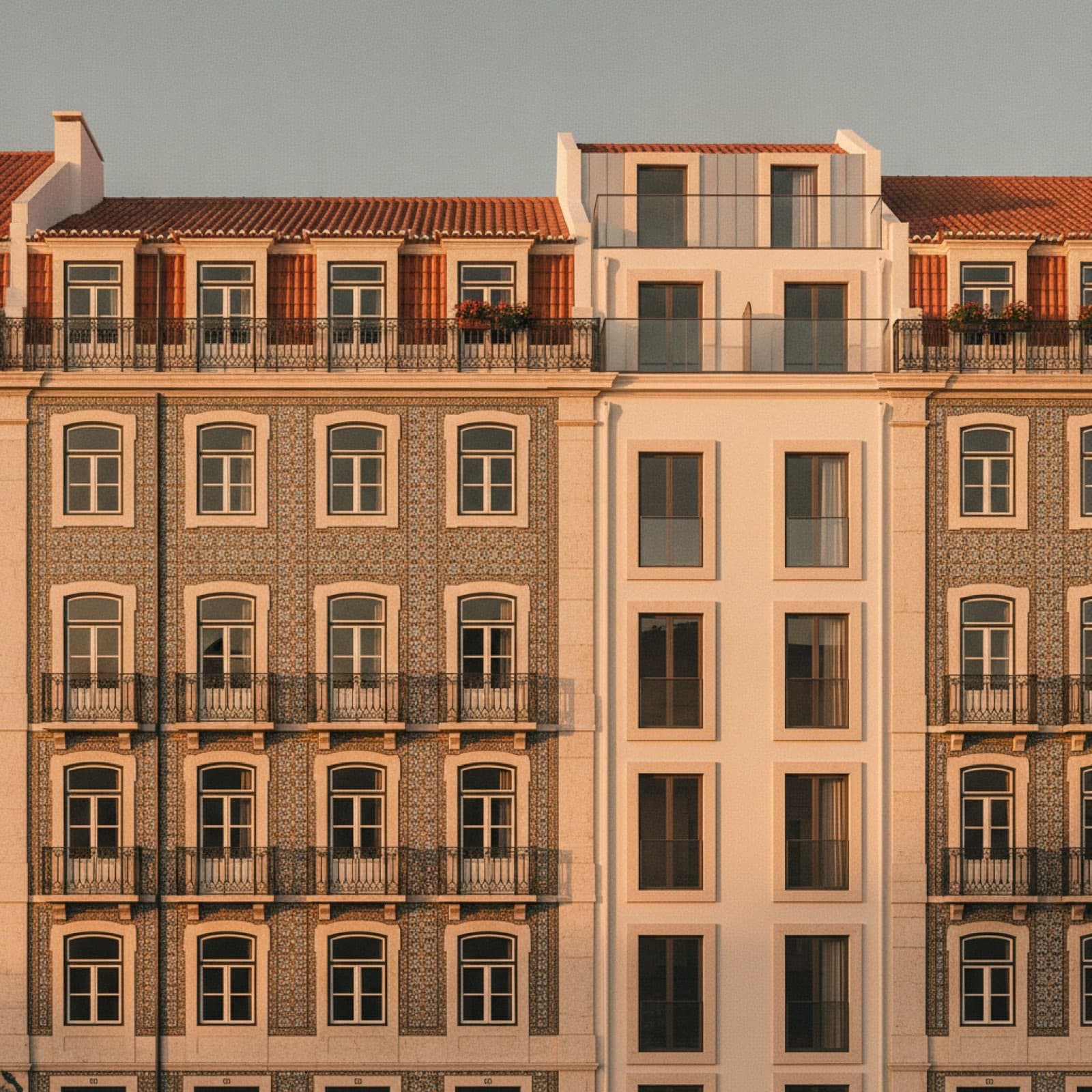
Apartments for Sale in Portugal: The Complete Foreign Buyer Guide (2026)
Most foreigners who buy in Portugal buy an apartment. Where it makes sense city by city, what it really costs on top of the price, how the condominio works, non-resident financing, and the apartment-specific traps.
Buying Guides
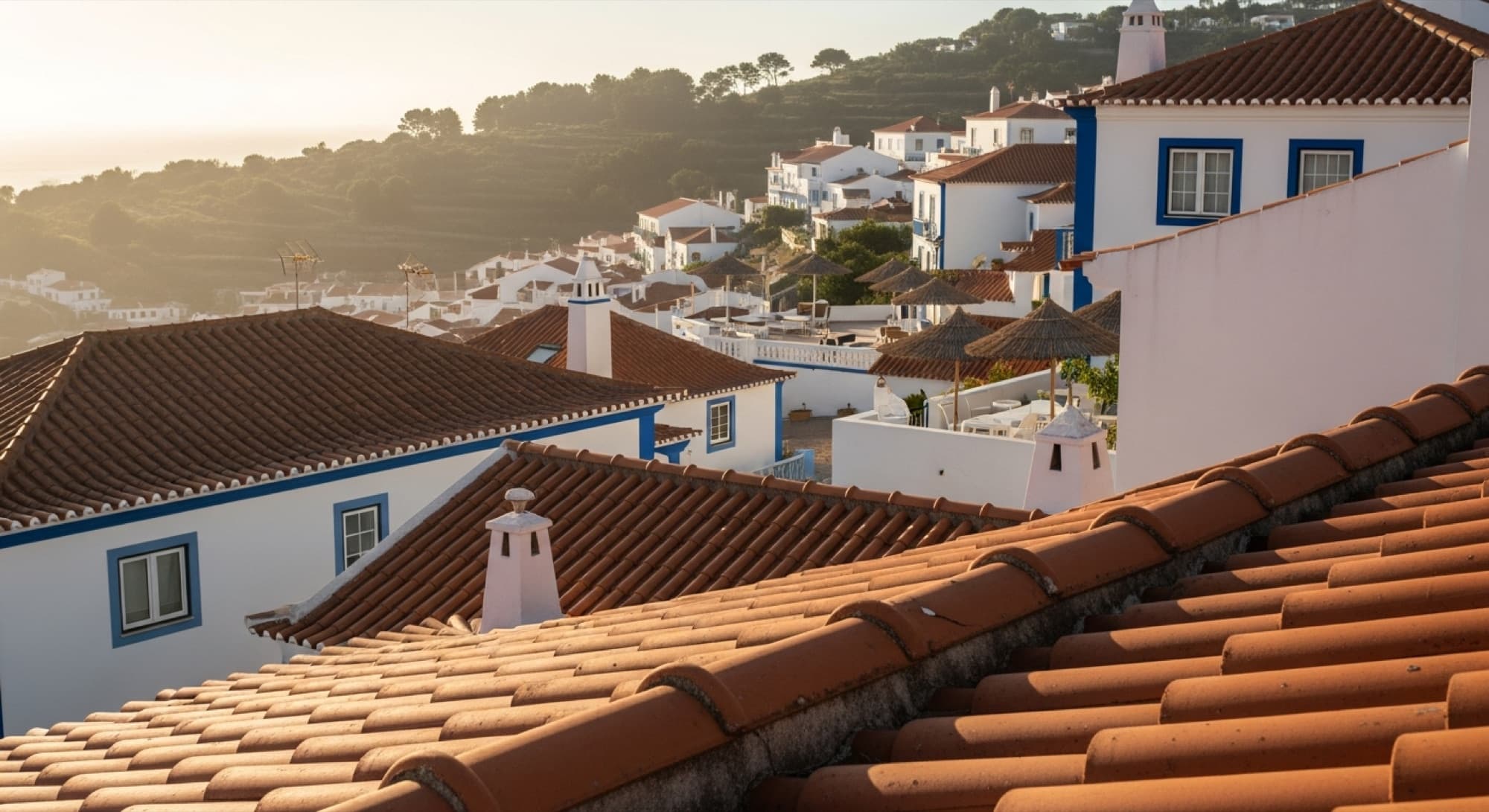
Houses for Sale in Portugal: Complete Buyer's Guide for Foreigners (2026)
The complete 2026 guide for foreigners buying property in Portugal. Real costs, step-by-step process, mortgage rates for non-residents, the best regions to buy, and what the post-2023 visa landscape actually looks like.

Buying Guides
How Much Deposit Do You Need to Buy a House in Portugal? (2026)
The reservation fee, the CPCV sinal, and the mortgage down payment are three different things. How much each one is, when each euro leaves your account, the double-return rule, and a full worked example.

Buying Guides
Buying a Vacation Home in Portugal: The 2026 Guide for Foreign Buyers
A vacation home is a different purchase from a home you will live in. The higher IMT scale, the empty-months running costs, the Alojamento Local licence map, the honest holiday-let math, and how to buy remotely.

Buying Guides
Buying Property in Portugal as an American: The Complete 2026 Guide
Americans are the second largest non-EU buyer cohort in Portuguese property. Financing at half US lifetime interest, the FATCA and IRS interplay, what the 2023 Golden Visa change means, and the full process.

Buying Guides
Canadians Buying Property in Portugal 2026: T1135, Non-Resident Withholding, and the FX Drag
Canadian buyers in Portugal 2026: CRA Form T1135 reporting, non-resident withholding, Canada-Portugal DTA credit math, NHR vs IFICI for retirees, BC Speculation Tax trap, CAD-EUR hedging, financing, regions, mistakes.
Take the next step
Ready to buy in Portugal?
Tell us your budget, target region, and timeline. You will get a personalized buying plan with realistic property matches and a total-cost projection.
Start free assessmentArticle slug: dutch-buyers-property-portugal-complete-guide-2026