Algarve Real Estate Investment 2026: Town-by-Town Guide for Foreign Buyers
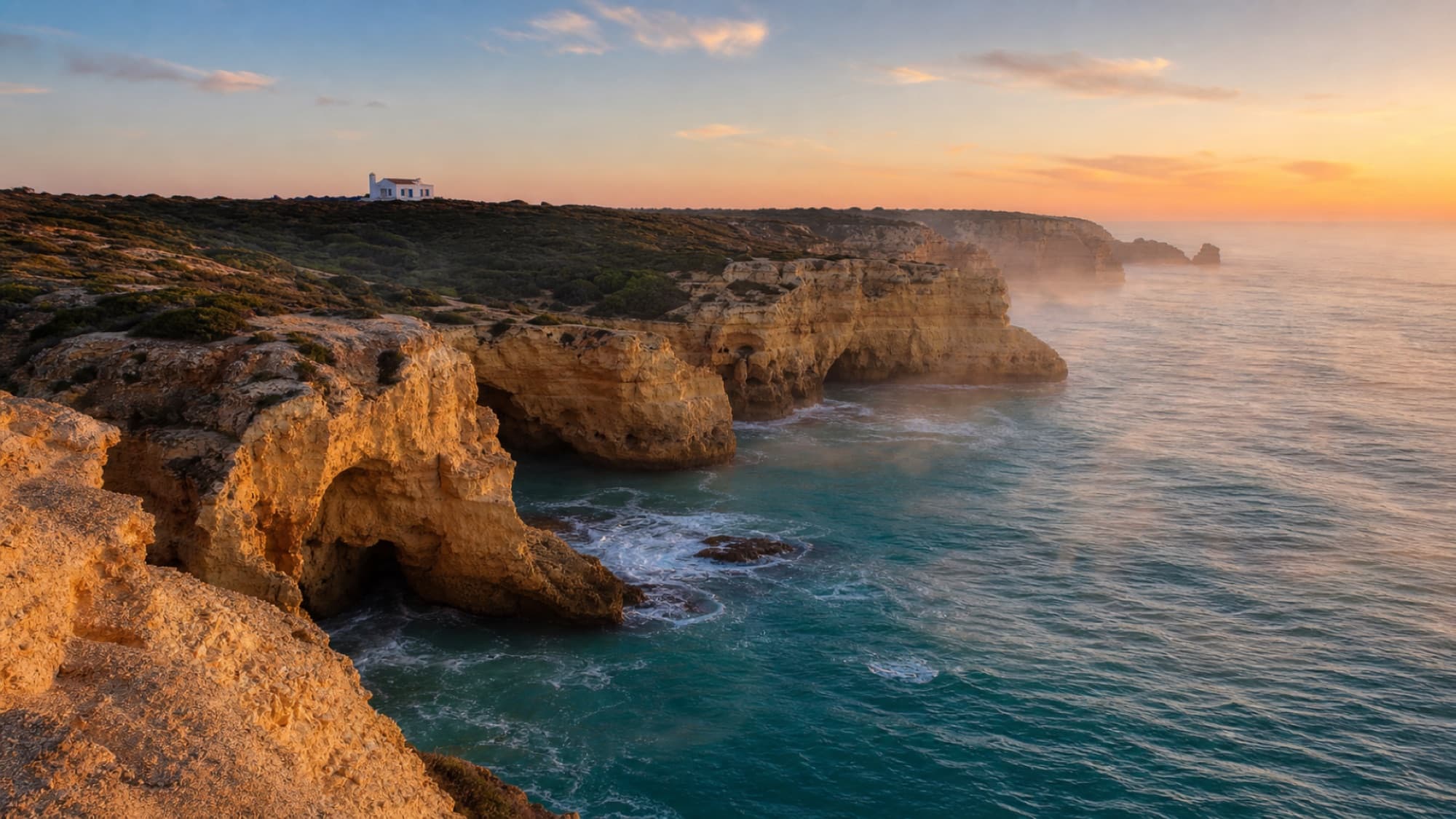
The Algarve in 2026 is the most foreign-saturated property market in Portugal, the strongest short-let region on paper, and the easiest place in the country to overpay for the wrong house in the wrong town. This guide is the honest, town-by-town read for foreign buyers planning to move in 2026 or 2027. Last updated: 17 May 2026.
Roughly one in three property transactions along the Algarve coast in 2025 involved a foreign buyer, and in towns like Lagos, Tavira and Carvoeiro that share climbs past 50% in the renovated-villa segment, according to Idealista and INE data published in the first quarter of 2026. The Algarve is a regional market with seven distinct micro-markets, three foreign-buyer cohorts, and one freshly revised short-let regulation that determines whether a property pays for itself or sits empty eight months a year. Read this before you book the viewing trip.
Thinking about an Algarve purchase in 2026?
Our team has helped foreign buyers close on properties in Lagos, Tavira, Vilamoura and Loulé since 2019. Book a 30-minute Algarve assessment to find out which town, price band and rental model actually fits your goal.
Table of contents
- The Algarve in numbers
- The 7 Algarve micro-markets that matter
- Short-let regulation (Alojamento Local) in 2026
- Year-round vs seasonal rental math
- Mortgages in the Algarve
- Climate, seasonality and primary-residence reality
- Where the foreign communities cluster
- The Algarve gotchas
- 7 mistakes Algarve buyers make
- Frequently asked questions
- Sources
The Algarve in numbers
The Algarve is Portugal's southernmost region, home to roughly 467,000 residents across 16 municipalities, with a foreign-resident base that has roughly doubled since 2018. The headline numbers below come from INE (Instituto Nacional de Estatística), Idealista's regional price index, Banco de Portugal's Q1 2026 housing report, and AT (Autoridade Tributária) registry data for Alojamento Local properties.
| Metric | Algarve 2026 | National comparison |
|---|---|---|
| Permanent population | 467,000 | 10.6M Portugal |
| Summer peak population (July, August) | ~1.4M | Tourism multiplier ~3x |
| Foreign-buyer share of transactions (2025) | 32% to 41% by sub-region | National avg ~12% |
| Average asking price (renovated, coastal) | €3,750 per m² | Lisbon avg €5,420 per m² |
| Average gross rental yield (long-let) | 4.0% to 5.2% | Lisbon 3.6%, Porto 4.4% |
| Average gross rental yield (short-let, where AL licensed) | 5.8% to 7.4% | Lisbon 4.5% (capped) |
| Average days on market (renovated stock) | 78 days | National 96 days |
| Largest foreign-resident nationalities | UK, Germany, Ireland, France, Netherlands | UK leads since 2014 |
| Active AL (short-let) licenses (Algarve) | ~41,200 | ~28% of national total |
What those numbers actually tell you. First, the Algarve is structurally a tourist economy, which is why the gross rental yield headlines look better than Lisbon. Second, the foreign-buyer share is high enough that in some towns the price is set by what a Dutch or Irish buyer is willing to pay, not what a local family can afford, and that distortion has not corrected in 2026. Third, the days-on-market figure hides a wide spread. Renovated three-bedroom villas in Lagos with sea glimpses move in under 45 days. Inland needs-work farmhouses can sit 9 to 14 months.
The 7 Algarve micro-markets that matter
"The Algarve" as a single market does not exist. The price you pay per square metre, the rental model that works, the foreign community you will live alongside and the year-round livability change dramatically across a 150 km coast. Below is the working map most foreign buyers need before a viewing trip. Prices are mid-2026 asking-price averages from Idealista and confirmed against three regional agencies; expect a 5% to 10% negotiation discount on listed asking prices outside of Lagos and Vilamoura.
| Town | €/m² renovated | €/m² needs-work | Dominant foreign cohort | Best for |
|---|---|---|---|---|
| Lagos | €4,200 to €5,800 | €2,400 to €3,100 | UK, Dutch, Irish | Short-let yield, English-speaking life |
| Tavira | €3,100 to €4,200 | €1,800 to €2,500 | French, German, some Dutch | Quieter year-round, slower lifestyle |
| Albufeira | €3,400 to €4,800 | €2,000 to €2,800 | UK, Irish | High-volume short-let, accept density |
| Vilamoura | €4,800 to €7,200 | €3,000 to €3,800 | International mix, Scandinavian | Premium family, golf, marina lifestyle |
| Loulé | €2,400 to €3,400 | €1,400 to €2,000 | French, German, mixed | Value, growing, interior + market town |
| Faro | €2,800 to €3,800 | €1,600 to €2,400 | Mixed, more locals | Year-round, airport access, university |
| Carvoeiro | €4,400 to €6,200 | €2,600 to €3,400 | UK heavy, some Dutch | Premium small-town coastal, lower density |
Lagos: the biggest English-speaking community on the west Algarve
Lagos has the largest concentration of British, Dutch and Irish residents on the western Algarve, year-round expat infrastructure (international clinic, two international schools, English-language churches and clubs), and a short-let market that runs from late March through October. Average daily rate for a renovated two-bedroom near the marina ran €165 in July 2025 (AirDNA Algarve market report, January 2026). The trade-off is summer congestion and a property-price floor that has not dropped since 2019. New AL license applications are restricted in Lagos historic centre; verify license status before paying a premium for "AL-licensed" stock.
Tavira: quieter, French-leaning, salt-flats coast
Tavira sits on the eastern Algarve near the Spanish border. It is quieter, lower-density, the foreign community leans French and German, and the coast is salt flats and barrier islands rather than the dramatic cliffs of Lagos or Carvoeiro. Prices are 20% to 25% below Lagos for comparable renovated stock. Short-let yield is lower because the tourist season is shorter and intensity is lower, but long-let demand from year-round residents (including remote workers on D8 visas) has firmed prices up since 2023. Tavira is the right Algarve for primary-residence buyers who want calm.
Albufeira: tourist-saturated, short-let strong but dense
Albufeira generates the highest absolute short-let revenue per AL license in the Algarve thanks to package-tourism volume, mostly from the UK and Ireland. The flipside is density. Stays are short, turnover and cleaning costs are high, and property condition wears faster. Albufeira works for an investor who wants pure yield and is comfortable hiring a professional AL operator. It is the wrong town if you also plan to spend July there yourself.
Vilamoura: golf and marina, family-oriented, premium
Vilamoura is the Algarve's planned premium resort. Five championship golf courses, a marina, an international school, and the highest property prices in the region. It attracts an international mix with a strong Scandinavian and northern European base. Condominium fees in the established resort developments run €200 to €450 per month and have grown 6% to 9% annually since 2022 (verified across three Vilamoura property managers, March 2026). Vilamoura is a primary or secondary-residence play, not a yield play.
Loulé: interior, value, growing
Loulé is the inland market town 18 km north of Faro and Vilamoura. Prices are roughly 35% to 45% below the coastal towns for comparable stock, the Saturday market is one of the most authentic in the region, and the foreign cohort is more mixed and less English-dominant. Loulé has grown as remote workers on D8 visas (see our D8 digital nomad visa guide) prioritise authenticity and value over coastal proximity. Short-let yield is weaker, long-let plus primary-residence is the play.
Faro: capital, airport, year-round livability
Faro is the regional capital, home to the international airport and the University of the Algarve. It has the most year-round economic activity, the lowest property prices among the named markets, and a smaller foreign-resident base relative to Lagos or Tavira. Faro suits buyers who want airport access, year-round services, and a real Portuguese city rather than an expat enclave.
Carvoeiro: small, British, premium coastal
Carvoeiro is a small coastal village west of Albufeira with a heavy British and Dutch resident base, dramatic cliff coastline, and a price level that has stayed close to Lagos despite the smaller scale. The short-let market is strong April through October. Stock is limited, which is part of why prices have held. Buyers should expect competition on listed properties under €700,000.
Short-let regulation (Alojamento Local) in 2026
Portugal's short-let regime is governed by Decreto-Lei 76/2006, substantially revised by the Mais Habitação law of October 2023 and partially rolled back by Decreto-Lei 76/2024 in July 2024. The status in May 2026 matters more than the history. The current rules.
- New AL license registration is paused in designated "contention zones" (zonas de contenção). In the Algarve these include Lagos historic centre, parts of Albufeira and the Tavira historic core. Verify the parish (freguesia) status with the municipal câmara before paying a premium for "AL potential."
- Outside contention zones, new AL licenses are being issued through the standard registration process via the Balcão Único Eletrónico portal. Loulé interior, parts of Faro and rural eastern Algarve remain open.
- Existing AL licenses are not automatically transferable on property sale. The seller's license is tied to the property's registration but the new owner must re-register within 60 days and the municipality can refuse re-registration in a contention zone. This is the single most expensive Algarve buyer mistake in 2025 and 2026.
- Annual AL fees and inspections apply. The 2023 reform added an annual "extraordinary contribution" (CEAL) on AL income for properties in pressured municipalities, partially rolled back in July 2024 but still applicable to a defined list of parishes. Confirm the 2026 list with your Portuguese accountant.
- AT income reporting is mandatory. AL rental income is taxed at 25% under the simplified regime for non-residents, with a coefficient that lowers effective rate to roughly 8.75% to 11.5%. Reporting is via the Modelo 3 annual return plus periodic Modelo 30 declarations.
If you are buying for short-let, the underwriting question is no longer "can I get an AL license," it is "does this property carry a transferable, renewable AL license in 2026, and what is the parish status." Get the answer in writing from the municipal câmara, not from the seller.
Year-round vs seasonal rental math
The single most common Algarve overstatement is the gross yield. Listings advertise "6% to 8% rental yield" based on summer peak rates extrapolated across the calendar year. The honest math after costs is closer to 3% to 4.5% net for most properties, and below 3% if you are paying a premium price in a contention zone with non-transferable AL.
Worked example. A renovated two-bedroom villa in Lagos, 95 m², 800 m from the beach, listed at €450,000 in March 2026.
| Line item | 2026 worked figure | Notes |
|---|---|---|
| Purchase price | €450,000 | Asking €465,000, agreed at €450,000 after one round |
| Acquisition costs (IMT, stamp, notary, lawyer) | €33,300 | ~7.4% all-in for non-resident |
| All-in cost basis | €483,300 | Used for net yield calculation |
| Gross short-let revenue, full year | €28,000 | 165 nights at €170 avg, mix peak + shoulder |
| Headline gross yield | 6.2% | Against €450,000, what listings advertise |
| AL operator commission (20%) | (€5,600) | Professional management, cleaning, guest comms |
| Utilities, internet, condo fees | (€3,200) | Higher than long-let due to AC, hot water turnover |
| Maintenance, replacement reserve | (€2,400) | Short-let wears faster, plan 0.5% of value annually |
| IMI (municipal tax) | (€720) | 0.3% to 0.45% on the VPT |
| AT rental income tax (effective ~10%) | (€1,680) | Simplified regime, non-resident |
| Insurance (multi-risk, AL liability) | (€620) | Required for AL |
| Net annual income | €13,780 | After all operating + tax costs |
| Net yield on all-in cost basis | 2.85% | What you actually keep |
| Net yield on purchase price only | 3.06% | The number to compare to other regions |
The gap between the advertised 6.2% gross and the realistic 3% net is not a Lagos problem, it is an Algarve-wide pattern. Net yield assumptions of 3% to 4% are realistic for well-located, well-managed short-let. Anything above 5% net should be checked twice for hidden costs, optimistic occupancy or non-transferable AL exposure.
Mortgages in the Algarve
The same Portuguese banks lend in the Algarve as in Lisbon or Porto. Loan-to-value for non-residents typically caps at 70% (some banks 65% for first-time non-resident buyers), spreads in May 2026 sit at 1.0% to 1.6% over 12-month Euribor, and fixed-rate options are available at 3.4% to 4.1% for 5-year fixed. See our Portugal mortgage rates 2025 guide for the full underwriting picture.
Two Algarve-specific points. First, bank valuations on coastal renovated stock are usually close to or slightly below the agreed sale price, which is fine for buyers at 70% LTV. Bank valuations on needs-work or rural properties are conservative, often 15% to 25% below the agreed price, which means a buyer planning to finance a needs-work farmhouse needs more cash than they expected. Second, the major banks (Millennium BCP, Novobanco, Santander Totta, BPI, CGD) have all underwritten thousands of UK, Irish, German, Dutch and French non-resident files in the Algarve and the process is straightforward provided you supply 3 months of bank statements, 2 years of tax returns and a clean credit history.
Climate, seasonality and primary-residence reality
The Algarve averages 300 sunny days per year, with summer highs of 28 to 32°C on the coast (interior runs warmer) and winter lows rarely below 8°C. That climate is the reason 67% of foreign property purchases on the coast are intended as primary or part-year residences, not pure investments (Idealista buyer-intent survey, Q4 2025).
The seasonality matters for two reasons. First, summer population roughly triples on the central Algarve coast between Albufeira and Lagos. If your viewing trip is in February, walk the streets you are buying on in mid-July before you sign. Second, winter is genuinely quiet in towns like Tavira, Carvoeiro and Loulé. Restaurants close, some neighbours leave, and primary-residence buyers should test winter livability before committing. Faro and Lagos run year-round; the smaller coastal villages mostly do not.
Where the foreign communities cluster (and clash)
The Algarve has roughly 100,000 foreign residents on permanent or long-stay status, plus a much larger seasonal and part-year base. The clusters are visible and they shape neighbourhood culture, school choice and social life.
- Lagos and the west: British, Dutch and Irish dominate. Two international schools (Nobel and Vale Verde area), strong English-speaking professional services (lawyers, accountants, doctors), active sailing and surf communities.
- Tavira and the east: French and German lean, smaller British contingent. Lower density, slower pace, fewer English-medium services but workable.
- Vilamoura and Quinta do Lago: international mix, strong Scandinavian and Dutch presence, premium international schools (Nobel International School Algarve, Colégio Internacional de Vilamoura), golf-oriented social life.
- Albufeira: British and Irish heavy, tourist-economy adjacent, less of a year-round expat professional class.
- Loulé and the interior: French and German, with mixed Portuguese, more integrated with local life, less English-default in cafés and shops.
The "clash" framing is overstated, but town-to-town cultural texture is real. A British family expecting Lagos and finding Tavira will feel under-served. A French retiree expecting Tavira and finding Albufeira will feel oversold to. Choose the town to match the cohort you want to live alongside, not the price per square metre.
The Algarve gotchas
Region-specific traps that the national-level guides miss.
- AL license non-transferability. Covered above. The seller's license does not automatically transfer. In a contention parish, the new owner may not be able to re-register. Verify with the municipal câmara in writing before signing the CPCV (Contrato Promessa de Compra e Venda).
- ETI (energy performance) certificate disputes. The Certificado Energético is mandatory and graded A+ through F. Coastal renovated stock often shows B or C ratings that turn out to be optimistic; older properties marked C frequently test at D or E on independent re-inspection. Insist on a recent (within 12 months) certificate from an accredited assessor.
- Builder and contractor shortages. The Algarve's renovation queue is real. Quality contractors in Lagos, Tavira and Carvoeiro typically quote 4 to 9 months out for full renovations as of Q1 2026. Buyers planning a needs-work purchase in low season (November through March) should line up the builder before signing the CPCV, not after closing.
- Water rights on rural plots. Inland properties may rely on private wells (furos), shared boreholes or river-extraction rights with conditions tied to APA (Agência Portuguesa do Ambiente) permits. These rights do not always transfer cleanly. Check the Caderneta Predial and APA records.
- Condominium fee inflation in golf-resort developments. Vilamoura, Quinta do Lago and similar planned resorts have raised condominium fees 6% to 9% per year since 2022. The fee covers grounds, security and shared facilities, and the trajectory is set by the resort management, not the owner. Forecast 10 years of fees, not 1.
- Coastal erosion and PDM zoning. The Plano Diretor Municipal restricts construction within coastal protection zones. A "build potential" listing on a coastal plot may have zero buildable area under the current PDM. Verify with the câmara before paying for "development upside."
- Tax-resident status drift. Foreign buyers who spend more than 183 days in Portugal in a calendar year become tax-residents automatically. Combined with the rental income reporting, the AT (tax authority) link is tighter than buyers expect. Pair the purchase with proper tax planning, ideally using the NHR 2.0 / IFICI regime where you qualify.
7 mistakes Algarve buyers make
- Buying needs-work in the low season without lining up a builder. The cheap winter price looks like a deal until April when every contractor is booked. Get firm written quotes before the CPCV.
- Treating advertised gross yield as net. The 6% to 8% figures in listings are pre-cost, pre-tax, peak-extrapolated. The honest net is 3% to 4.5%. Run the worked-example math above on every property you consider.
- Overpaying for "AL-licensed" listings without verifying transferability. The license premium can run €30,000 to €80,000 on a coastal flat. If the license cannot re-register at the new owner, that premium is lost.
- Picking the wrong town for school access. Lagos has Nobel and Vale Verde; Vilamoura has CIV and NISA; Tavira and Loulé families typically commute. If your buyer profile includes school-age children, school matters more than view.
- Mis-pricing winter low season. Short-let occupancy in Tavira, Carvoeiro and the smaller villages drops below 25% from late October to March. Pricing the annual revenue at "summer rate times 11 months" is the most common Algarve underwriting error.
- Ignoring AT tax reporting on rental income. The simplified regime is straightforward but reporting is mandatory. Failure to file Modelo 30 quarterly or Modelo 3 annually triggers AT penalties and complicates future tax-resident filings.
- Signing the CPCV without an Algarve-specialist lawyer. Lisbon and Porto lawyers are competent on the national framework but often miss municipal-câmara-specific items, PDM zoning quirks and AL transferability nuance. Hire local.
Run your Algarve numbers with us, not the listing site.
We model the realistic net yield, verify AL transferability with the câmara, and surface the gotchas above before you sign anything. 30-minute assessment, no obligation.
Related reading
- Houses for sale in Portugal: the complete buyer guide
- Lisbon vs Porto property investment: regional comparison
- Portugal mortgage rates 2025: non-resident complete guide
- Portugal NHR 2.0 / IFICI tax regime 2026
- Portugal D7 visa: complete guide for foreigners 2026
- Portugal D8 digital nomad visa: complete guide 2026
- Portugal NIF tax number: complete guide for Americans
Frequently asked questions
Is the Algarve a good investment in 2026?
For buyers prioritising lifestyle plus realistic 3% to 4.5% net rental yield, yes. For buyers chasing the 6% to 8% gross yield numbers in listings, the answer is more honest: those numbers do not survive contact with operating costs, AT taxes and winter occupancy. The Algarve in 2026 is a strong primary or part-year residence market with secondary rental income, not a pure-yield play.
Which Algarve town has the best rental yield?
On a gross basis, Albufeira and Lagos sit at the top because of tourism volume and AL density. On a net basis after operator fees, vacancy and condition wear, Loulé and Faro long-let frequently produce better net yields (4% to 5%) than coastal short-let, because operating costs are lower and tenants are year-round.
Can I still get a new Alojamento Local license in the Algarve in 2026?
Yes in many parishes, no in designated "contention zones" including Lagos historic centre, parts of Albufeira and the Tavira historic core. Outside those zones, new AL registration runs through the Balcão Único Eletrónico portal. Always verify parish status with the municipal câmara in writing before pricing AL upside into a purchase.
Lagos or Tavira: which is better for foreign buyers?
Lagos for buyers who want a larger English-speaking community, year-round expat services, two international schools and stronger short-let yield, accepting summer density and higher prices. Tavira for buyers who want a quieter, French and German leaning town, 20% to 25% cheaper renovated stock, slower pace, and a primary-residence rather than yield orientation.
What's the average property price in the Algarve in 2026?
The regional asking-price average for renovated coastal stock sits at €3,750 per m² in May 2026 (Idealista regional index). The range across the named seven towns runs from €2,400 per m² in Loulé to €7,200 per m² in premium Vilamoura, so the "average" is less useful than the town-by-town table above.
Are mortgages harder in the Algarve than Lisbon?
No on the renovated coastal stock that most foreign buyers target; the underwriting is identical and the major banks are familiar with UK, Dutch, German, French and Irish files. Yes on needs-work rural properties, where bank valuations come in 15% to 25% below the agreed price and buyers need more cash than expected to bridge the gap.
Which Algarve town has the biggest British community?
Lagos has the largest year-round British resident community on the western Algarve, with Albufeira and Carvoeiro close behind. The eastern Algarve (Tavira, Olhão) leans more French and German. If proximity to an English-speaking community matters, Lagos, Carvoeiro, Albufeira and Vilamoura are the four to shortlist.
What's the typical net rental yield after costs?
3% to 4.5% net is the honest range for short-let in 2026 across the seven named markets, after AL operator commission, utilities, maintenance, IMI, AT rental tax and insurance. Long-let in Faro and Loulé can produce 4% to 5% net with lower operating intensity. Anything claimed above 5.5% net should be checked against the worked-example math above.
Sources
- Idealista Portugal regional price index, Algarve, Q1 2026: idealista.pt/media/relatorios-preco-habitacao
- INE Instituto Nacional de Estatística, foreign-buyer transaction data, 2025 release: ine.pt
- AT Autoridade Tributária, Registo Nacional de Alojamento Local: rnt.turismodeportugal.pt
- Decreto-Lei 76/2006 (original AL regime): dre.pt
- Mais Habitação law (Lei 56/2023): dre.pt/lei/56-2023
- Decreto-Lei 76/2024 (partial rollback, July 2024): dre.pt
- Banco de Portugal, Q1 2026 housing and credit report: bportugal.pt
- OECD tourism data, Portugal regional breakdown: oecd.org/cfe/tourism
- IPMA Instituto Português do Mar e da Atmosfera, Algarve climate normals: ipma.pt
- AirDNA Algarve short-let market report, January 2026: airdna.co
- Turismo de Portugal, regional tourism statistics: travelbi.turismodeportugal.pt
- APA Agência Portuguesa do Ambiente, water-rights permits: apambiente.pt
- Câmara Municipal de Lagos, AL contention zone declarations: cm-lagos.pt
- Câmara Municipal de Tavira, urban planning office (PDM): cm-tavira.pt
- Portuguese Bar Association directory, Algarve property lawyers: portal.oa.pt
Recent articles on Lisbon
Independent reporting and how-to from the Lisbon beat for foreign buyers of Portuguese property.

Take the next step
Ready to buy in Portugal?
Tell us your budget, target region, and timeline. You will get a personalized buying plan with realistic property matches and a total-cost projection.
Start free assessmentArticle slug: algarve-real-estate-investment-guide-foreigners-2026