Can You Buy Property in Portugal and Get Residency? The 2026 Reality
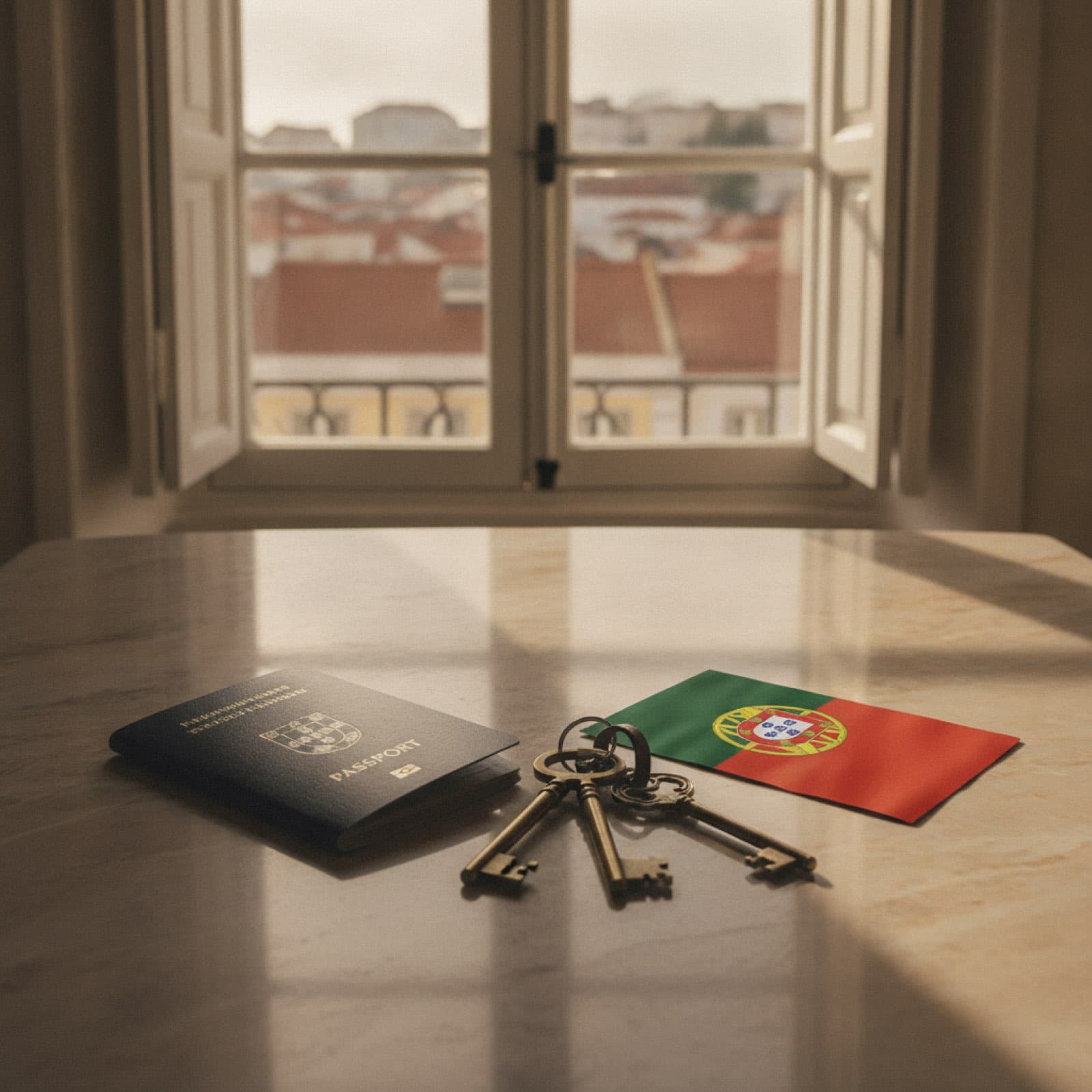
Last updated: July 2026. This is the question we get more than any other, usually phrased exactly like this: "If I buy an apartment in Portugal, do I get residency?" The honest answer is no, not directly, not since October 2023. But the honest answer is also more useful than that: property still plays a real supporting role in the two residency routes most buyers actually use, and there is still one Golden Visa path standing. This guide lays out what died, what survives, and the right order to do things in.
The fast answer: No. Buying property in Portugal has not granted residency since the real-estate Golden Visa route was abolished in October 2023 (Law 56/2023). Any site telling you a 500,000 EUR apartment comes with a residence permit is out of date. What still works: the D7 visa (passive income) and D8 visa (remote work), where owning a home strengthens the accommodation part of your application, and the Golden Visa's surviving routes, mainly regulated investment funds from 500,000 EUR. Citizenship eligibility follows after 7 years of legal residency for CPLP and EU citizens (10 for others) under the nationality law in force since 19 May 2026.
What this guide covers
- What ended in October 2023
- What owning property still does for residency
- Route 1: the D7 visa, with property
- Route 2: the D8 digital nomad visa
- Route 3: the Golden Visa that survives (funds)
- Residence permit vs tax residency
- The path to citizenship
- Buy first or visa first?
- Frequently asked questions
- Sources
What ended in October 2023
For a decade, Portugal's Golden Visa let non-EU nationals trade a 500,000 EUR property purchase (280,000 to 400,000 EUR in some interior and rehabilitation cases) for a residence permit with minimal stay requirements. That route was abolished by the Mais Habitação package, Law 56/2023, in October 2023. Real-estate purchases made since then earn no residency rights, anywhere in the country, at any price.
Existing holders were not stripped of their permits, and renewals continue under transition rules. But for a new buyer in 2026, the equation is simple: property purchase and residency are now two separate projects. A large share of the content still ranking on Google predates this change; if an article promises residency through property, check its date and close the tab.
What owning property still does for residency
Not nothing. Every Portuguese residence-visa application has to show, among other things, accommodation in Portugal and ties to the country. Owning a home helps in three concrete ways:
- Proof of accommodation. The D7 and D8 applications require you to show where you will live. A property deed in your name answers that question cleanly, with no landlord paperwork.
- Evidence of commitment. Consulates evaluate whether your relocation plan is real. Owning the home you plan to live in is strong evidence.
- Financial coherence. A mortgage-free home lowers your monthly cost of living, which strengthens the income-sufficiency picture in a D7 file.
What it does not do: skip the income requirements, skip the stay requirements, or produce a permit by itself.
Route 1: the D7 visa, with property
The D7 is Portugal's passive-income residency route: pensions, rental income, dividends, interest. It fits retirees and anyone whose money arrives without a job attached. You apply at the Portuguese consulate in your home country, then convert to a residence permit with AIMA after arrival. Income must be stable, documented, and above the legal thresholds, which track the Portuguese minimum wage and update annually; verify the current figures on the official sources before you file.
Where the property fits: many D7 applicants buy their Portuguese home first, use the deed as the accommodation evidence in the visa file, and move in when the visa lands. The full route, documents, timeline, and AIMA process are in our complete D7 guide.
Mind the stay requirements: the D7 expects you to actually live in Portugal. It is a relocation visa, not a convenience permit for two visits a year.
Route 2: the D8 digital nomad visa
The D8 serves remote employees and freelancers working for clients or employers outside Portugal, with an income threshold set as a multiple of the Portuguese minimum wage (verify the current figure when you apply). Same architecture as the D7: consulate first, then AIMA, and accommodation evidence required, which an owned property satisfies.
For a working-age buyer who fell in love with Lisbon or Madeira, D8 is usually the realistic route: your salary continues, your accommodation is your own apartment, and your application tells one coherent story. Madeira and the secondary cities, covered in our apartments guide, are where the price-to-lifestyle math works best for remote workers.
Route 3: the Golden Visa that survives (funds)
The Golden Visa program itself was not abolished, only its real-estate and capital-transfer routes. The main surviving path is investment of at least 500,000 EUR in qualifying regulated investment funds (plus routes for business creation with jobs, scientific research, and cultural heritage that most private buyers never use).
Why anyone still bothers: the Golden Visa's stay requirement remains famously light, an average of 7 days per year, which is the only Portuguese route that grants residency without relocating. People who want Portugal as an option rather than a home, and who have 500,000 EUR to place in a fund, are the audience.
Three cautions before anyone wires money at a fund presentation:
- The fund route is a regulated-securities investment with real risk and multi-year lock-ups; it is not a deposit with a visa attached.
- Fund eligibility rules exclude funds invested directly or indirectly in real estate; verify a fund's qualification independently, not on the promoter's slide.
- Processing backlogs at AIMA have been substantial; plan timelines conservatively.
The combination to avoid: buying a property AND a fund ticket because a salesperson packaged them together "for the visa". The property adds nothing to the Golden Visa application. If you want a home, buy a home. If you want the visa, evaluate the fund on its investment merits alone.
Residence permit vs tax residency
Two systems, constantly confused:
- The residence permit (immigration) is what AIMA grants: your right to live in Portugal.
- Tax residency (Finanças) is triggered by facts, mainly spending more than 183 days a year in Portugal or making your habitual home there, and it decides where you pay tax on worldwide income.
You can own a Portuguese vacation home for decades without ever becoming tax resident, and you can become tax resident without any residence permit if you simply overstay your welcome in days. Movers on the D7/D8 typically become tax resident in year one, at which point the IFICI regime (the successor to NHR, 20 percent flat rate on eligible income for qualifying professions) is worth evaluating: our NHR and IFICI guide covers who qualifies. Owners who stay non-resident pay Portuguese tax only on Portuguese-source income, like rent, as covered in our vacation home guide.
The path to citizenship
The nationality law was amended with effect from 19 May 2026: citizenship now requires 7 years of legal residency for citizens of CPLP countries and the EU, and 10 years for other nationals, with the clock counted from the issuance of the residence card and a basic Portuguese language requirement (A2). Applications filed before the change keep the earlier five-year rule. Even at seven years, the passport remains a real driver of D7/D8 demand: the visa is the entry, the citizenship is the plan.
Two honesty notes: citizenship timelines in practice run longer than the statute because processing queues are real, and nationality-law parameters are periodically debated in parliament, so verify the current requirements when you start the clock rather than relying on any article, including this one.
Buy first or visa first?
The order depends on which route you are on:
- D7/D8 movers: either order works, but buying first is common and practical: the deed strengthens the visa file, and you avoid paying rent in Portugal while owning nothing. The risk to manage is buying before you are certain the visa profile works, so get the income side validated before the CPCV. Renting first for a year is the cautious default we suggest to anyone unsure of city or neighbourhood; our moving to Portugal guide makes that case.
- Golden Visa (fund) applicants: the property is irrelevant to the application. Buy if and when you want the home, on its own merits.
- Not sure you will move at all: buy the home you want, skip the visa question entirely, and use your passport's standard Schengen allowance. Ownership requires no immigration status, as our eligibility guide explains, and the residency decision can wait until life answers it.
Free 2-minute assessment
Tell us your situation: budget, income type, and whether you plan to relocate. We will map the realistic route (D7, D8, fund, or no visa at all) and introduce the lawyer we would use for your case.
Frequently asked questions
Does buying property in Portugal give you residency?
No, not since October 2023. Property supports a D7 or D8 application (accommodation evidence) but grants nothing by itself. The surviving Golden Visa runs through regulated funds, not real estate.
Can I still get a Golden Visa in 2026?
Yes, via qualifying investment funds from 500,000 EUR (not real-estate linked), business creation, research, or cultural routes. The stay requirement stays light at an average of 7 days per year.
What is the minimum property price for residency?
There is none, because no property price produces residency anymore. The 500,000 EUR figure that still circulates refers to the old real-estate route (dead) and the fund route (alive, but it is a fund, not a flat).
How does a property help my D7 or D8 file?
It answers the accommodation requirement with a deed, evidences real commitment, and lowers your monthly costs, which helps the income assessment. Income thresholds still apply in full.
How long to citizenship?
Since 19 May 2026: 7 years of legal residency for CPLP and EU citizens (10 for others), counted from card issuance, with an A2 requirement. Applications filed before the change keep the 5-year rule; queues make practice slower than statute.
Do I have to live in Portugal if I buy there?
No. Ownership carries no immigration obligations and no immigration rights. You can own for decades as a non-resident, visiting on your passport's standard Schengen terms.
Which route fits your situation?
Tell us your income type, budget, and plans. We will map D7 vs D8 vs fund vs no-visa for your case and introduce the immigration lawyer we would use. Two minutes, no obligation.
Sources
- Lei 56/2023 (Mais Habitação), Diário da República, ending the Golden Visa real-estate route, 6 October 2023.
- AIMA, Agência para a Integração, Migrações e Asilo, residence permits, D7/D8 conversion, Golden Visa processing.
- Portal das Comunidades / MNE visa portal, national visa categories and consular application requirements.
- Autoridade Tributária e Aduaneira, tax-residency rules and the IFICI regime.
- Justiça.gov.pt, Portuguese nationality applications and requirements.
- CMVM, Comissão do Mercado de Valores Mobiliários, regulation of investment funds used in the Golden Visa fund route.
Recent articles on Visas & Residency
Independent reporting and how-to from the Visas & Residency beat for foreign buyers of Portuguese property.
Visas & Residency
Portugal Golden Visa 2026: The Honest Guide After the Real-Estate Route Ended
The Portugal Golden Visa real-estate route ended on 7 October 2023 with Law 56/2023. This guide covers the five investment routes that still qualify in May 2026, realistic AIMA timelines, full costs, and when the D7 or D8 is a better fit.

Visas & Residency
Portugal D8 Digital Nomad Visa 2026: Complete Guide for Remote Workers
Portugal's D8 visa lets remote employees and freelancers live in Portugal on non-Portuguese income. This 2026 guide covers the €3,680 threshold, AIMA timeline, D8 vs D7 disambiguation, and the honest tax picture after NHR closed to new entrants.

Visas & Residency
Portugal D7 Visa 2026: Complete Guide for Foreign Passive-Income Applicants
A May 2026 guide to the Portuguese D7 visa for retirees, pre-retirees, and remote workers with passive income. Real income thresholds, real AIMA timelines, real costs, and a side-by-side against the D8 and the post-2023 Golden Visa.
Take the next step
Ready to buy in Portugal?
Tell us your budget, target region, and timeline. You will get a personalized buying plan with realistic property matches and a total-cost projection.
Start free assessmentArticle slug: buy-property-portugal-get-residency-2026